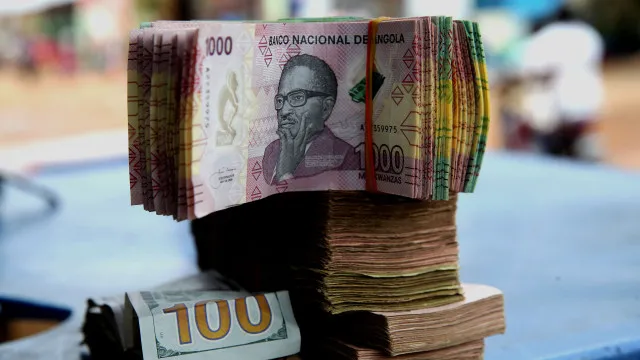
Kwanza is second currency in the SADC cross-border payment system
Created in 2013, SADC-RTGS, an electronic cross-border transfer system that liquidates real-time funds, has so far carried out transactions..
- Center2
- Center-right1
2 agency rewrites / co-publications detected
Summary
Established in 2013, the SADC-RTGS, an electronic cross-border transfer system that liquidates real-time funds, has so far carried out transactions exclusively in South African rand, with kwanza being the second currency admitted to the system, in which 15 countries participate. Five Angolan commercial banks were also accepted as participants: the Angolan Investment Bank (BAI), the International Credit Bank (BIC), the International Business Bank (BNI), the South Credit Bank (BCS) and the Yetu Bank. The next currency to be integrated should be Botswana's pula in an advanced process.
Furthermore, The creation of a multi-currency capacity in the SADC-RTGS aims to strengthen regional financial integration, promote the use of local currencies in cross-border trade and reduce foreign currency dependence outside the SADC. According to the BNA, the inclusion of kwanza allows institutions operating in this currency to avoid exchange rate conversion through currencies outside the system, which reduces costs, increases speed and improves the security of cross-border transactions.
Cross-referenced from 3 sources.
Factual coreconfirmed by several independent voices
Established in 2013, the SADC-RTGS, an electronic cross-border transfer system that liquidates real-time funds, has so far carried out transactions exclusively in South African rand, with kwanza being the second currency admitted to the system, in which 15 countries participate.
reliability low1/3 sourcesFive Angolan commercial banks were also accepted as participants: the Angolan Investment Bank (BAI), the International Credit Bank (BIC), the International Business Bank (BNI), the South Credit Bank (BCS) and the Yetu Bank.
reliability low1/3 sourcesThe next currency to be integrated should be Botswana's pula in an advanced process.
reliability low1/3 sourcesThe creation of a multi-currency capacity in the SADC-RTGS aims to strengthen regional financial integration, promote the use of local currencies in cross-border trade and reduce foreign currency dependence outside the SADC.
reliability low1/3 sourcesAccording to the BNA, the inclusion of kwanza allows institutions operating in this currency to avoid exchange rate conversion through currencies outside the system, which reduces costs, increases speed and improves the security of cross-border transactions.
reliability low1/3 sources
Disputedincompatible versions — to verify
No factual contradiction detected between sources.
Framing by sidesame fact, different words — loaded terms highlighted
No notable framing divergence.
Blind spotwhat one side keeps silent
No blind spot detected: every side covers the same facts.
Sources3 sources cross-checked
Center-right1