Japanese artist Yayoi Kusama dies at 97
- Center1
- Center-right3
- Public / State1
4 agency rewrites / co-publications detected

Summary
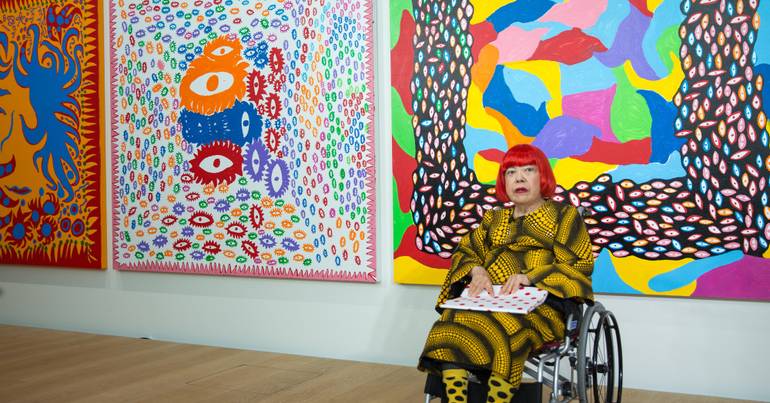
Japanese artist Yayoi Kusama dies at 97. Born in 1929, the artist, world famous for her standards to immersive balls and facilities, immediately recognizable by her vibrant red wig, was inspired by the hallucinations she had experienced since childhood. Despite his success in the United States, where he influenced contemporaries such as Andy Warhol and Claes Oldenburg, Kusama returned to Japan in 1973 after the worsening of his mental health problems.
Furthermore, In 1990, the artist voluntarily admitted to a psychiatric institution, from which she continued to produce works in various formats. Key figure of psychedelism and one of the most important artists of the 20th century, turned this mental universe into a prolific work that covers painting, sculpture, performance, literature and poetry. In 2006, she became the first woman to host the Imperiale Praemium of the Japanese Art Association, one of the most prestigious international art awards in the world.
In addition, The artist was born in 1929 and suffered from hallucinations since childhood, which fueled her artistic production.
Cross-referenced from 5 sources.
Factual coreconfirmed by several independent voices
Japanese artist Yayoi Kusama dies at 97.
reliability low1/5 sourcesBorn in 1929, the artist, world famous for her standards to immersive balls and facilities, immediately recognizable by her vibrant red wig, was inspired by the hallucinations she had experienced since childhood.
reliability low1/2 sourcesDespite his success in the United States, where he influenced contemporaries such as Andy Warhol and Claes Oldenburg, Kusama returned to Japan in 1973 after the worsening of his mental health problems.
reliability low1/2 sourcesIn 1990, the artist voluntarily admitted to a psychiatric institution, from which she continued to produce works in various formats.
reliability low1/2 sourcesKey figure of psychedelism and one of the most important artists of the 20th century, turned this mental universe into a prolific work that covers painting, sculpture, performance, literature and poetry.
reliability low1/2 sourcesIn 2006, she became the first woman to host the Imperiale Praemium of the Japanese Art Association, one of the most prestigious international art awards in the world.
reliability low1/2 sources
Reported detailssecondary facts, each attributed to its source
The artist was born in 1929 and suffered from hallucinations since childhood, which fueled her artistic production
according to Observador +2
Disputedincompatible versions — to verify
No factual contradiction detected between sources.
Framing by sidesame fact, different words — loaded terms highlighted
No notable framing divergence.
Blind spotwhat one side keeps silent
The anti-war activism of the Japanese artist was born at 16, when the United States dropped two atomic bombs on the cities of..
omitted byRight sidecovered byCenterPublic / AgenciesBorn in 1929, the artist, world famous for her standards to immersive balls and installations, immediately recognizable by her..
omitted byRight sidecovered byCenterPublic / AgenciesGraduated in Nihonga, a traditional style of Japanese painting defined at the end of the 19th century, at the Municipal School of Arts and Crafts of..
omitted byRight sidecovered byCenterPublic / AgenciesDespite his success in the United States, where he influenced contemporaries such as Andy Warhol and Claes Oldenburg, Kusama returned to Japan in 1973 after the..
omitted byRight sidecovered byCenterPublic / AgenciesIn 1990, the artist voluntarily admitted to a psychiatric institution, from which she continued to produce works in various formats.
omitted byRight sidecovered byCenterPublic / Agencies
