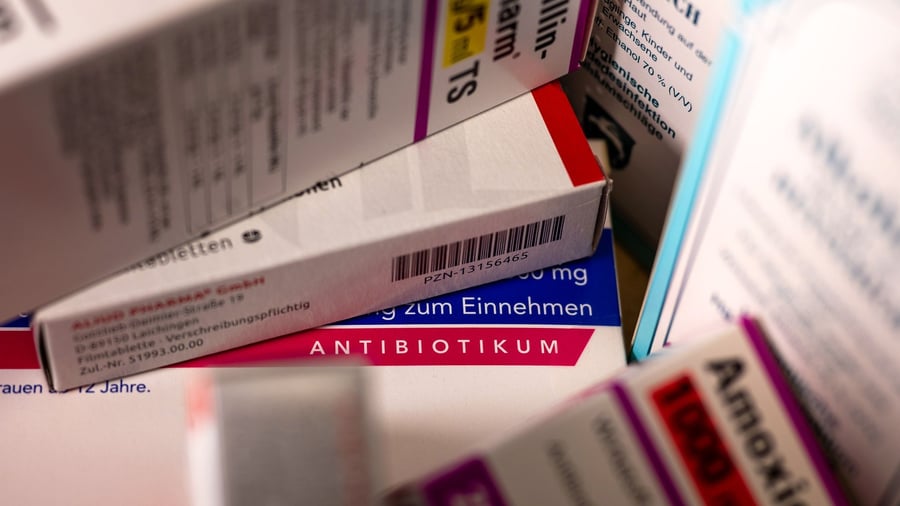
Medicines: Antibiotics are not used optimally globally
Drugs: Antibiotics are not used optimally globally.
- Center-left4
- Center-right1
4 agency rewrites / co-publications detected

Summary
Drugs: Antibiotics are not used optimally globally. Researchers used various databases to survey antibiotic use in 186 countries and territories. The research team led by Aislinn Cook from City St George's, University of London was guided by the three categories introduced by the World Health Organization (WHO) in 2017: simple means for common infections ("access"), more specific ones with a higher risk of resistance for antimicrobial resistance ("watch") and last means for serious infections by multidrug-resistant pathogens ("reserve"). “Ensuring equitable and appropriate access to effective, essential antibiotics is central to the Sustainable Development Goals,” the study authors write.
Furthermore, According to a published estimate, about 40.2 billion daily doses were consumed worldwide in 2018. “Overconsumption and lack of access are evident in the study,” explained Tim Eckmanns from the Robert Koch Institute in Berlin. One antibiotic treatment per person per year The global demand is estimated by the scientists at 43 billion daily doses in 2019. “Since the consumption data used refers to 2019, this concrete effect is not yet included in it, but it basically shows how vulnerable this normalization is to such distortions,” says Pletz.
In addition, These kinds of distortions would not have been considered by the authors for their study. © dpa-infocom, dpa:260721-930-418990/1. Compared to these Oriented countries, most countries used too many “watch” antibiotics from the middle category – of 67 countries studied, for which more extensive data was available, 66 countries, including Germany.
Cross-referenced from 5 sources.
Factual coreconfirmed by several independent voices
Drugs: Antibiotics are not used optimally globally.
reliability low1/5 sourcesResearchers used various databases to survey antibiotic use in 186 countries and territories.
reliability low1/2 sourcesThe research team led by Aislinn Cook from City St George's, University of London was guided by the three categories introduced by the World Health Organization (WHO) in 2017: simple means for common infections ("access"), more specific ones with a higher risk of resistance for antimicrobial resistance ("watch") and last means for serious infections by multidrug-resistant pathogens ("reserve"). “Ensuring equitable and appropriate access to effective, essential antibiotics is central to the Sustainable Development Goals,” the study authors write.
reliability low1/2 sourcesAccording to a published estimate, about 40.2 billion daily doses were consumed worldwide in 2018. “Overconsumption and lack of access are evident in the study,” explained Tim Eckmanns from the Robert Koch Institute in Berlin.
reliability low1/2 sourcesOne antibiotic treatment per person per year The global demand is estimated by the scientists at 43 billion daily doses in 2019.
reliability low1/2 sources“Since the consumption data used refers to 2019, this concrete effect is not yet included in it, but it basically shows how vulnerable this normalization is to such distortions,” says Pletz.
reliability low1/2 sourcesThese kinds of distortions would not have been considered by the authors for their study. © dpa-infocom, dpa:260721-930-418990/1
reliability low1/2 sourcesCompared to these Oriented countries, most countries used too many “watch” antibiotics from the middle category – of 67 countries studied, for which more extensive data was available, 66 countries, including Germany.
reliability low1/2 sources
Disputedincompatible versions — to verify
No factual contradiction detected between sources.
Framing by sidesame fact, different words — loaded terms highlighted
No notable framing divergence.
Blind spotwhat one side keeps silent
Researchers used various databases to survey antibiotic use in 186 countries and territories.
omitted byRight sidecovered byLeft sideThe research team led by Aislinn Cook from the City of St George's, University of London was guided by the three categories that..
omitted byRight sidecovered byLeft sideAccording to a published estimate, about 40.2 billion daily doses were consumed worldwide in 2018. Overconsumption and lack of access..
omitted byRight sidecovered byLeft sideOne antibiotic treatment per person per year The global demand is estimated by the scientists at 43 billion daily doses in 2019.
omitted byRight sidecovered byLeft side"Since the consumption data used refers to 2019, this concrete effect is not yet included in it, but it shows ..."
omitted byRight sidecovered byLeft side
Sources4 sources cross-checked
Center-left3
Center-right1