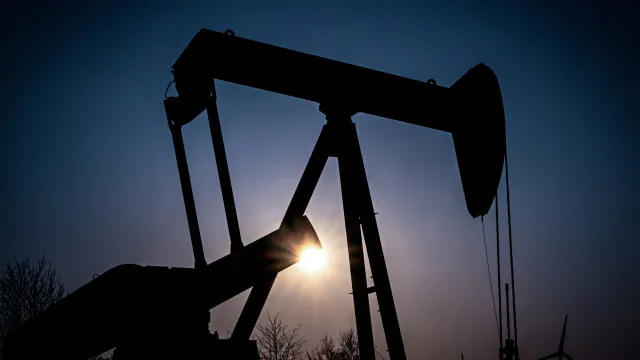
Decision of seven countries, including Saudi Arabia and Russia, closes 2023 cuts and aims at market stability
OPEC+ increases oil production in 188 thousand barrels per day in September
- Center-left2
- Center2
- Center-right1
4 agency rewrites / co-publications detected
Summary
Founded in 1960 in Baghdad, Saudi Arabia, Venezuela, Iran, Iraq, and Kuwait, OPEC currently comprises 11 countries. Saudi Arabia , Russia and five other members of the Opep + (Organization of Petroleum Exporting Countries) decided to increase oil production by 188,000 barrels per day in September at a meeting on Sunday (2). At the end of this virtual meeting, the seven OPEC+ countries (Algeria, Iraq, Kuwait, Saudi Arabia, Kazakhstan, Oman and Russia) decided to pursue the policy of "commitment to market stability", continuing a set of upward adjustments that added 940,000 barrels per day to quotas, equivalent to almost 1% of global demand since the start of the Middle East war on 28 February.
Furthermore, The increase of 188 thousand barrels per day predicted by OPEC+ for September ends, although only on paper, with the two rounds of cuts in production made in 2023, when the organization sought to avoid an excess of oil. In 2016, the group agreed to cooperate with ten other producing nations, including Russia, Mexico, Kazakhstan and Azerbaijan, which led to the OPEC+ alliance. Excluding the participation of the United Arab Emirates, these restrictions amounted to about 3.5 million barrels a day, although, in fact, reactivation was much smaller, as technical limitations prevent many countries from increasing production as much as they are allowed.
In addition, So far, these increases have been theoretical, because Iran has blocked the Ormuz Strait and has prevented the members of the Persian Gulf from increasing exports and production. Opep+ increases the share of petr leo production by 188,000 barrels per day. Between the end of 2022 and 2023, Opep+ began to worry about the drop in oil prices and agreed to perform cuts in three separate rounds, reducing total production by nearly six million barrels a day.
Cross-referenced from 5 sources.
Factual coreconfirmed by several independent voices
Founded in 1960 in Baghdad, Saudi Arabia, Venezuela, Iran, Iraq, and Kuwait, OPEC currently comprises 11 countries.
reliability low1/5 sourcesSaudi Arabia , Russia and five other members of the Opep + (Organization of Petroleum Exporting Countries) decided to increase oil production by 188,000 barrels per day in September at a meeting on Sunday (2).
reliability low1/3 sourcesAt the end of this virtual meeting, the seven OPEC+ countries (Algeria, Iraq, Kuwait, Saudi Arabia, Kazakhstan, Oman and Russia) decided to pursue the policy of "commitment to market stability", continuing a set of upward adjustments that added 940,000 barrels per day to quotas, equivalent to almost 1% of global demand since the start of the Middle East war on 28 February.
reliability low1/3 sourcesThe increase of 188 thousand barrels per day predicted by OPEC+ for September ends, although only on paper, with the two rounds of cuts in production made in 2023, when the organization sought to avoid an excess of oil.
reliability low1/3 sourcesIn 2016, the group agreed to cooperate with ten other producing nations, including Russia, Mexico, Kazakhstan and Azerbaijan, which led to the OPEC+ alliance.
reliability low1/3 sourcesExcluding the participation of the United Arab Emirates, these restrictions amounted to about 3.5 million barrels a day, although, in fact, reactivation was much smaller, as technical limitations prevent many countries from increasing production as much as they are allowed.
reliability low1/3 sourcesSo far, these increases have been theoretical, because Iran has blocked the Ormuz Strait and has prevented the members of the Persian Gulf from increasing exports and production.
reliability low1/3 sources
Reported detailssecondary facts, each attributed to its source
Opep+ increases the share of petr leo production by 188,000 barrels per day.
according to Folha de S.Paulo — Em Cima da Hora +1Between the end of 2022 and 2023, Opep+ began to worry about the drop in oil prices and agreed to perform cuts in three separate rounds, reducing total production by nearly six million barrels a day.
according to Folha de S.Paulo — Em Cima da Hora +1
Disputedincompatible versions — to verify
No factual contradiction detected between sources.
Framing by sidesame fact, different words — loaded terms highlighted
No notable framing divergence.
Blind spotwhat one side keeps silent
At the end of this virtual meeting, the seven OPEC+ countries (Algeria, Iraq, Kuwait, Saudi Arabia, Kazakhstan, Oman and Russia) decided..
omitted byLeft sidecovered byCenterRight sideThe increase of 188 thousand barrels a day predicted by OPEC+ for September ends, although only on paper, with the two rounds of cuts in the..
omitted byLeft sidecovered byCenterRight sideIn 2016, the group agreed to cooperate with ten other producing nations, including Russia, Mexico, Kazakhstan and Azerbaijan, which gave..
omitted byLeft sidecovered byCenterRight sideExcluding the participation of the United Arab Emirates, these restrictions amounted to about 3.5 million barrels a day, although in..
omitted byLeft sidecovered byCenterRight sideThe agreement was reached at the fourth meeting of the organization since the unexpected departure, announced in May, of the United Arab Emirates in full..
omitted byLeft sidecovered byCenterRight side
Sources5 sources cross-checked
Center-right1