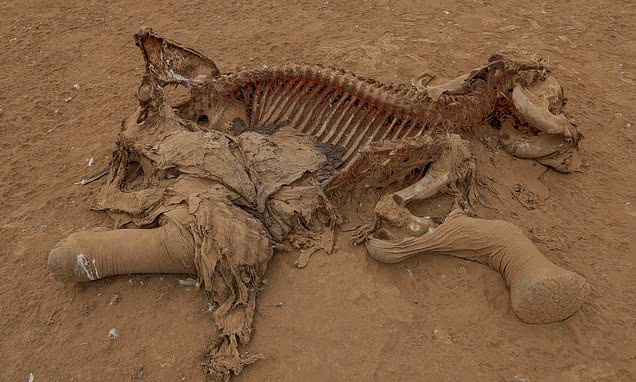
15 elephants are killed in suspected cyanide poisoning after eating farmers' tomatoes
Last season alone, Muchai said elephants destroyed about half an acre of his tomato crop, costing him an estimated 500,000 Kenya shillings
- Center1
- Right2
2 agency rewrites / co-publications detected
Summary
Last season alone, Muchai said elephants destroyed about half an acre of his tomato crop, costing him an estimated 500,000 Kenya shillings (£2,867). Between 2000 and 2020, at least 1,160 elephants died in incidents linked to self-defence or retaliatory killings Investigations are ongoing into how cyanide found its way to an ecosystem where wild and domestic animals coexist and farms grow tomatoes and onions Muchai said he has never encountered cyanide among the pesticides or chemicals sold to farmers in the area and insisted that products available on the market are regulated by the Kenyan government. 15 elephants are killed in suspected cyanide poisoning after eating farmers' tomatoes.
Furthermore, Last month, the Kenya Wildlife Service announced that 15 elephants had died in the Amboseli ecosystem in a span of a month. Kenya has until recently been widely recognized for rebuilding its elephant population from historic lows to more than 36,000 individuals by reducing poaching and protecting elephants. Elvis Muchai has farmed on the edge of Amboseli for two decades.
In addition, Kenya has until recently been widely recognized for rebuilding its elephant population Kimana, which borders Amboseli, is one of Kenya's most productive agricultural areas Farms have expanded near the park and conflict between people and elephants remains the second leading cause of deaths after poaching, according to Kenya's National Elephant Plan. Another farmer, Rymondy Mrosso, also questioned whether pesticides used by local farmers could explain the deaths and wondered why only elephants appeared to have been affected. The elephant deaths and disputes about the cause have intensified concerns about growing human-wildlife conflict in the region due to expanding agricultural activities near Amboseli Park.
Moreover, The head of veterinary services at Kenya’s wildlife agency, Dr Isaac Lekolool, said the elephants had shown signs of “paralysis and difficulty breathing” before they died.
Cross-referenced from 3 sources.
Factual coreconfirmed by several independent voices
Last season alone, Muchai said elephants destroyed about half an acre of his tomato crop, costing him an estimated 500,000 Kenya shillings (£2,867).
reliability low1/3 sourcesBetween 2000 and 2020, at least 1,160 elephants died in incidents linked to self-defence or retaliatory killings Investigations are ongoing into how cyanide found its way to an ecosystem where wild and domestic animals coexist and farms grow tomatoes and onions Muchai said he has never encountered cyanide among the pesticides or chemicals sold to farmers in the area and insisted that products available on the market are regulated by the Kenyan government.
reliability low1/3 sources15 elephants are killed in suspected cyanide poisoning after eating farmers' tomatoes.
reliability low1/3 sourcesLast month, the Kenya Wildlife Service announced that 15 elephants had died in the Amboseli ecosystem in a span of a month.
reliability low1/3 sourcesKenya has until recently been widely recognized for rebuilding its elephant population from historic lows to more than 36,000 individuals by reducing poaching and protecting elephants.
reliability low1/3 sourcesElvis Muchai has farmed on the edge of Amboseli for two decades.
reliability low1/3 sourcesKenya has until recently been widely recognized for rebuilding its elephant population Kimana, which borders Amboseli, is one of Kenya's most productive agricultural areas Farms have expanded near the park and conflict between people and elephants remains the second leading cause of deaths after poaching, according to Kenya's National Elephant Plan.
reliability low1/3 sourcesAnother farmer, Rymondy Mrosso, also questioned whether pesticides used by local farmers could explain the deaths and wondered why only elephants appeared to have been affected.
reliability low1/3 sources
Reported detailssecondary facts, each attributed to its source
The elephant deaths and disputes about the cause have intensified concerns about growing human-wildlife conflict in the region due to expanding agricultural activities near Amboseli Park.
according to Sowetan LiveThe head of veterinary services at Kenya’s wildlife agency, Dr Isaac Lekolool, said the elephants had shown signs of “paralysis and difficulty breathing” before they died.
according to Sowetan Live
Disputedincompatible versions — to verify
No factual contradiction detected between sources.
Framing by sidesame fact, different words — loaded terms highlighted
No notable framing divergence.
Blind spotwhat one side keeps silent
No blind spot detected: every side covers the same facts.