Good weather at solar eclipse and shooting stars
In the evening - depending on the location in Germany - from about 19.15 clock the moon pushes in front of the sun and provides for a partial solar eclipse.
- Center-left1
- Center-right1
1 agency rewrite / co-publication detected

Summary
In the evening - depending on the location in Germany - from about 19.15 clock the moon pushes in front of the sun and provides for a partial solar eclipse. The last total solar eclipse to hit mainland Europe was also seen in parts of southern Germany and Austria in 1999. The maximum is expected between about 8 pm and 8:15 pm.
Furthermore, The spectacle ends with sunset depending on the location around 20.30 to 21.00 clock. Largely good weather is also predicted for the total solar eclipse in Spain, which will completely darken a strip of the country around 8:30 pm. The electricity is best observed from 11 p.m. to 4 a.m., with astronomers expecting up to a hundred shooting stars per hour.
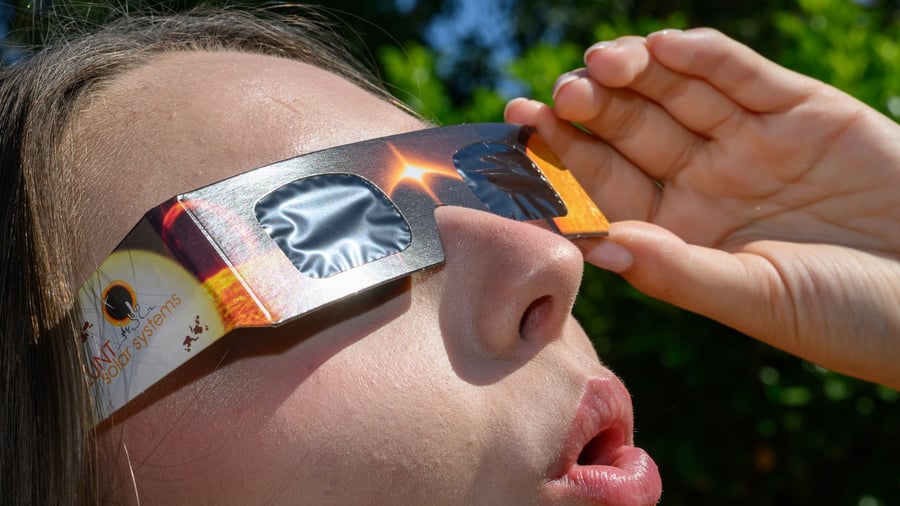
In addition, About 85 to 90 percent of the sun will be covered. “But in a single place, this totality is relatively short at this solar eclipse, between one and a half minutes on Mallorca and a maximum of just over two minutes west of Iceland.” Solar eclipse glasses are absolutely necessary.
Cross-referenced from 2 sources.
Factual coreconfirmed by several independent voices
In the evening - depending on the location in Germany - from about 19.15 clock the moon pushes in front of the sun and provides for a partial solar eclipse.
reliability low1/2 sourcesThe last total solar eclipse to hit mainland Europe was also seen in parts of southern Germany and Austria in 1999.
reliability low1/2 sourcesThe maximum is expected between about 8 pm and 8:15 pm.
reliability low1/2 sourcesThe spectacle ends with sunset depending on the location around 20.30 to 21.00 clock.
reliability low1/2 sourcesLargely good weather is also predicted for the total solar eclipse in Spain, which will completely darken a strip of the country around 8:30 pm.
reliability low1/2 sourcesThe electricity is best observed from 11 p.m. to 4 a.m., with astronomers expecting up to a hundred shooting stars per hour.
reliability low1/2 sourcesAbout 85 to 90 percent of the sun will be covered.
reliability low1/2 sources
Reported detailssecondary facts, each attributed to its source
“But in a single place, this totality is relatively short at this solar eclipse, between one and a half minutes on Mallorca and a maximum of just over two minutes west of Iceland.” Solar eclipse glasses are absolutely necessary.
according to DIE ZEIT
Disputedincompatible versions — to verify
No factual contradiction detected between sources.
Framing by sidesame fact, different words — loaded terms highlighted
No notable framing divergence.
Blind spotwhat one side keeps silent
No blind spot detected: every side covers the same facts.
Sources2 sources cross-checked
Center-left1
Center-right1