Implementation of a quadrupedal robot that judges situations on its own and runs and jumps... KAIST develops control technology
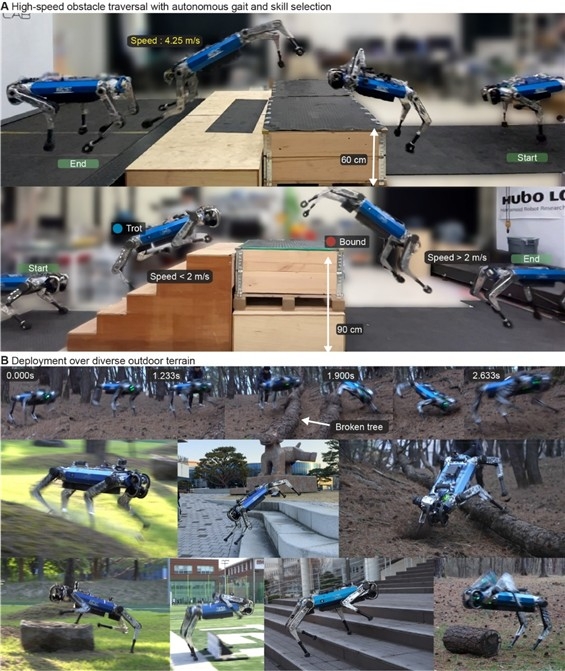
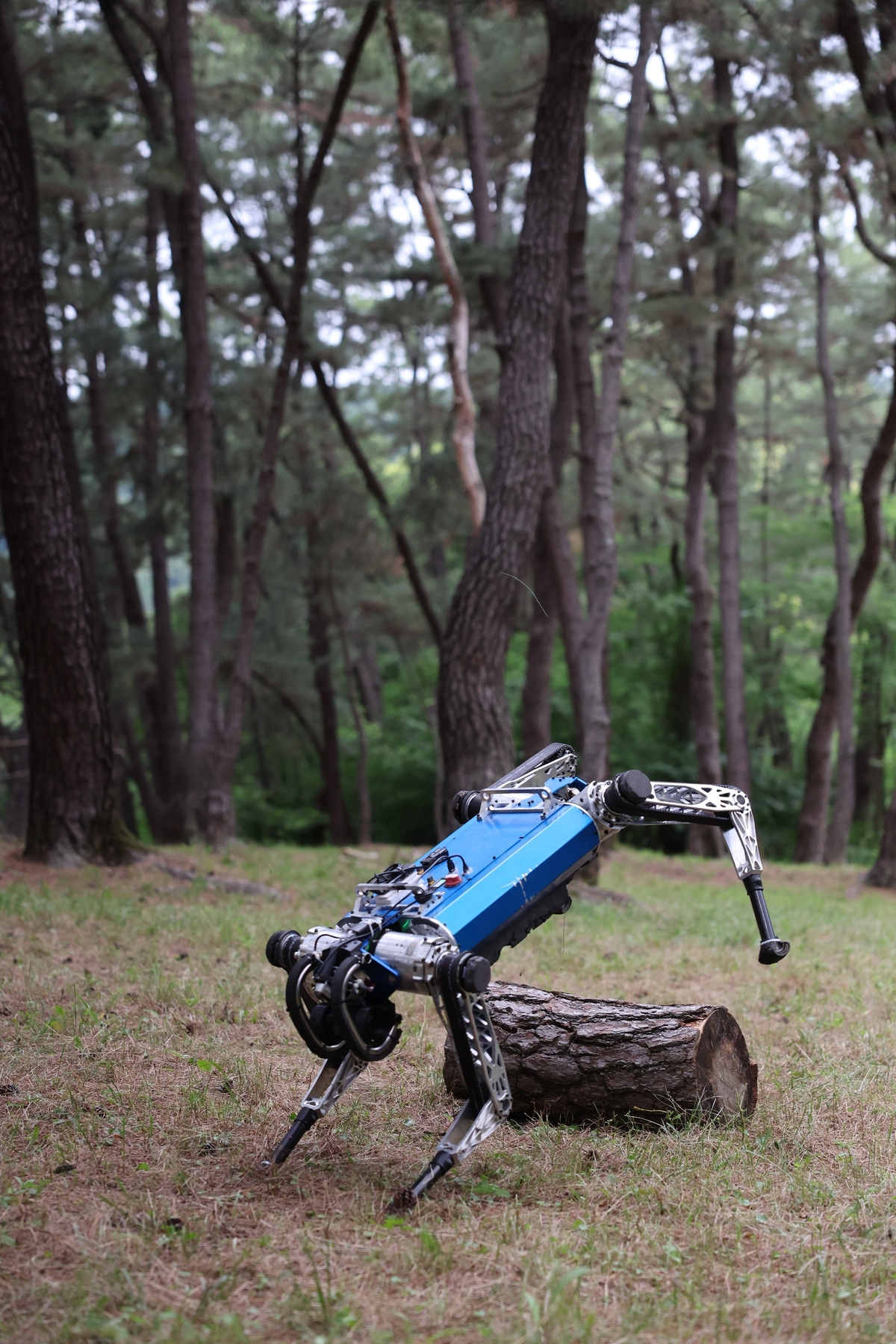
KAIST announced on the 16th that a research team led by Professor Park Hae-won of the Department of Mechanical Engineering has developed a quadrupedal robot control technology that can quickly and stably move by selecting and switching various locomotion skills such as walking, running, and jumping in real time.
- Center-left1
- Agency1
1 agency rewrite / co-publication detected
Summary
KAIST announced on the 16th that a research team led by Professor Park Hae-won of the Department of Mechanical Engineering has developed a quadrupedal robot control technology that can quickly and stably move by selecting and switching various locomotion skills such as walking, running, and jumping in real time. The research team generated a total of 15.5 hours of training data containing various locomotion skills solely through computer simulation, without having to film actual human or animal movements one by one. In particular, it added that it recorded an instantaneous maximum speed of 22 km/h on rough terrain with obstacles, proving that it can secure both fast mobility and stability even in real outdoor environments.
Cross-referenced from 2 sources.
Factual coreconfirmed by several independent voices
KAIST announced on the 16th that a research team led by Professor Park Hae-won of the Department of Mechanical Engineering has developed a quadrupedal robot control technology that can quickly and stably move by selecting and switching various locomotion skills such as walking, running, and jumping in real time.
reliability low1/2 sources
Reported detailssecondary facts, each attributed to its source
The research team generated a total of 15.5 hours of training data containing various locomotion skills solely through computer simulation, without having to film actual human or animal movements one by one.
according to Yonhap News AgencyIn particular, it added that it recorded an instantaneous maximum speed of 22 km/h on rough terrain with obstacles, proving that it can secure both fast mobility and stability even in real outdoor environments.
according to Yonhap News Agency
Disputedincompatible versions — to verify
No factual contradiction detected between sources.
Framing by sidesame fact, different words — loaded terms highlighted
No notable framing divergence.
Blind spotwhat one side keeps silent
No blind spot detected: every side covers the same facts.
Sources2 sources cross-checked
Center-left1
Agency1